31 rules
31 is a quick draw-and-discard card game for 2 or more players. You hold 3 cards and try to get as close to 31 as you can in one suit. Any player can knock to end the hand. The lowest hand loses a life, and the last player still in the game wins.
Also called Scat, Thirty-One, Blitz.
- Players
- 2 to 9, each playing alone
- You need
- A standard 52-card deck, and 3 pennies or chips for each player
- Deal
- 3 cards each. The next card is turned face up, and the rest are the stock.
- Each turn
- Take the top card of the stock or the discard pile, then discard 1 card. Or knock instead of drawing.
- Goal
- Stay off the bottom. Your hand is the total of your cards in one suit, and 31 is the best.
- Game ends
- When only one player is left in the game. That player wins.
- Playing time
- About 20 to 30 minutes
Quick start
- Give each player 3 lives, such as 3 pennies. Deal 3 cards each. Turn the next card face up to start the discard pile. The rest are the stock.
- Your hand is worth your cards of one suit added up. Aces count 11, kings, queens and jacks 10, other cards their number. The best hand is 31.
- On your turn, take the top card of the stock or the discard pile. Then discard one card face up.
- At the start of your turn you may knock instead of drawing. Each other player gets one last turn. Then everyone shows their cards.
- The lowest hand loses a life, and players tied for lowest each lose one. A knocker who ties is safe. A knocker alone at the bottom loses 2. Showing 31 costs everyone else a life.
- A player with no lives left is on the county and keeps playing. Lose once more and you are out. The last player left in wins.
Rule sheet and score sheet
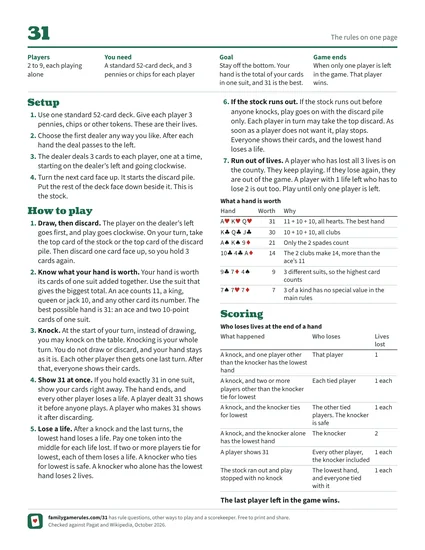
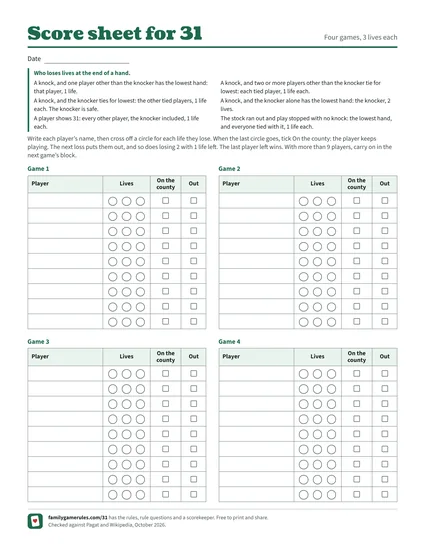
Print the whole game on one page, and a score sheet made for 31. Both are free PDFs for Letter paper.
Setup
2 to 9 players, each playing alone. Bigger groups play too. A note on 2 players is further down.
You need: One standard 52-card deck with the jokers taken out.
| In the set | Count | Worth when scoring |
|---|---|---|
| Aces | 4 | 11 points each |
| Kings, queens and jacks | 12 | 10 points each |
| Number cards, 2 through 10 | 36 | The number on the card |
| Total | 52 |
- Each player also needs 3 pennies, chips or other small tokens. These are their lives.
- A card’s points count only together with other cards of its suit. See Know what your hand is worth, below.
- Use one standard 52-card deck. Give each player 3 pennies, chips or other tokens. These are their lives.
- Choose the first dealer any way you like. After each hand the deal passes to the left.
- The dealer deals 3 cards to each player, one at a time, starting on the dealer’s left and going clockwise.
- Turn the next card face up. It starts the discard pile. Put the rest of the deck face down beside it. This is the stock.
Each player’s hand
Stock
The rest of the deck, face down
Discard pile
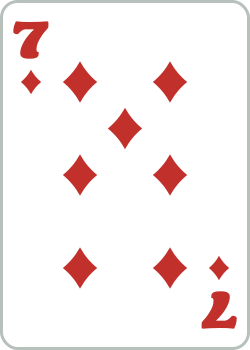
Starts with one face-up card
- One way to choose the first dealer is to cut the deck. The player who cuts the lowest card deals.
How to play
Players take turns drawing a card and discarding a card, trying to build a high total in one suit. The hand ends when someone shows 31, after a knock and one last turn for everyone else, or when the stock runs out and a player does not want the top discard.
-
Draw, then discard
The player on the dealer’s left goes first, and play goes clockwise. On your turn, take the top card of the stock or the top card of the discard pile. Then discard one card face up, so you hold 3 cards again.
- You may not take the top discard and throw the same card back on that turn. You must keep it and discard a different card.
- A card you draw from the stock may be discarded straight away.
-
Know what your hand is worth
Your hand is worth its cards of one suit added together. Use the suit that gives the biggest total. An ace counts 11, a king, queen or jack 10, and any other card its number. The best possible hand is 31: an ace and two 10-point cards of one suit.
- Cards of different suits are never added together. If all 3 cards are in different suits, your hand is worth its highest card.
- Three cards of the same rank have no special value in the main rules. Three 7s are in 3 different suits, so they are worth 7. Some groups count them as 30 or 30½. See the house rules.
-
Knock
At the start of your turn, instead of drawing, you may knock on the table. Knocking is your whole turn. You do not draw or discard, and your hand stays as it is. Each other player then gets one last turn. After that, everyone shows their cards.
- Knock when you think at least one other player will end up lower than you.
- The knock takes the place of your draw, so you cannot draw a card first and then knock.
- The rule sources we checked set no lowest score you need before you may knock. Some groups set one. See the house rules.
-
Show 31 at once
If you hold exactly 31 in one suit, show your cards right away. The hand ends, and every other player loses a life. A player dealt 31 shows it before anyone plays. A player who makes 31 shows it after discarding.
- A 31 made on a last turn after a knock still counts. Every other player loses one life, the knocker included.
- If two or more players are dealt 31, every player without 31 loses a life.
- Show 31 as soon as you have it. If you keep quiet, you cannot claim it later. It then counts as 30, and if someone else shows 31 you lose a life with the others.
-
Lose a life
After a knock and the last turns, the lowest hand loses a life. Pay one token into the middle for each life lost. If two or more players tie for lowest, each of them loses a life. A knocker who ties for lowest is safe. A knocker who alone has the lowest hand loses 2 lives.
- When the knocker ties for lowest, the other players in the tie each lose a life and the knocker loses nothing.
- The tokens paid in stay in the middle. The rule sources we checked do not say what happens to them when the game ends, so agree on it if you play for real coins.
-
If the stock runs out
If the stock runs out before anyone knocks, play goes on with the discard pile only. Each player in turn may take the top discard. As soon as a player does not want it, play stops. Everyone shows their cards, and the lowest hand loses a life.
- Players tied for lowest each lose a life here too, and nobody is safe in a tie, because there is no knocker. The one exception: if every player still in is on the county and they all have the same total, nobody goes out. Play the hand again.
- Some groups call the hand off when the stock runs out, and nobody loses a life. See the house rules.
-
Run out of lives
A player who has lost all 3 lives is on the county. They keep playing. If they lose again, they are out of the game. A player with 1 life left who has to lose 2 is out too. Play until only one player is left.
- Being on the county has other names, such as on welfare, on your honor or floating.
| Hand | Worth | Why |
|---|---|---|
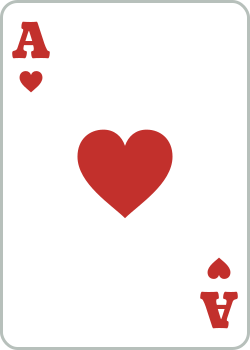
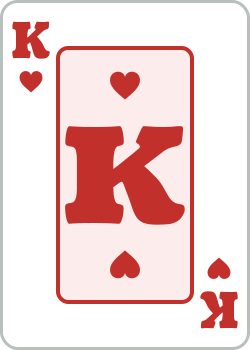
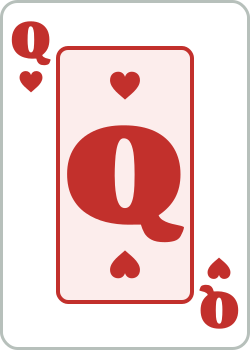
| A♥ K♥ Q♥ | 31 | 11 + 10 + 10, all hearts. The best hand |
| K♣ Q♣ J♣ | 30 | 10 + 10 + 10, all clubs |
| A♠ K♠ 9♦ | 21 | Only the 2 spades count |
| 10♣ 4♣ A♦ | 14 | The 2 clubs make 14, more than the ace’s 11 |
| 9♣ 7♦ 4♠ | 9 | 3 different suits, so the highest card counts |
| 7♠ 7♥ 7♦ | 7 | 3 of a kind has no special value in the main rules |
Example: a knock, and who loses a life
Ben, Cara, you and Ana sit in that order, going clockwise. At the start of his turn Ben knocks, holding the king and 9 of spades and the 2 of hearts. That is 19. He does not draw. Cara, you and Ana each take one last turn. Then everyone shows. Cara has 27 in clubs and you have 25 in hearts. Ana has the ace and 8 of diamonds, which make 19, and the 6 of clubs. Ben and Ana tie for lowest. The knocker is safe in a tie, so only Ana loses a life. If Ana had ended above 19, Ben would have been alone at the bottom and lost 2 lives.
Ben (knocked)
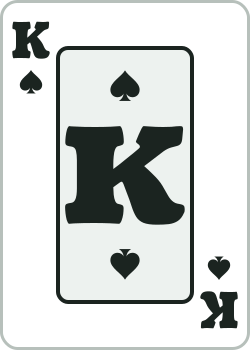
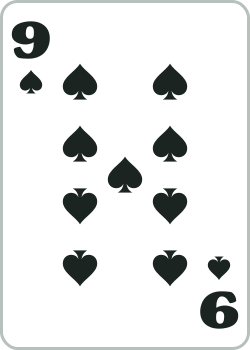
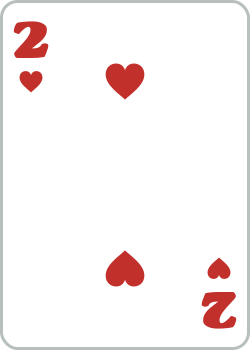
19 in spades. Tied for lowest, so safe
Cara
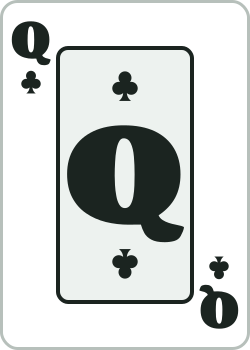
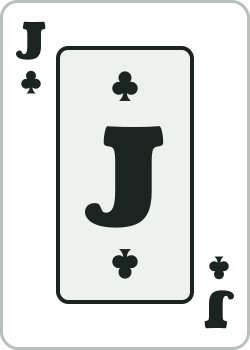
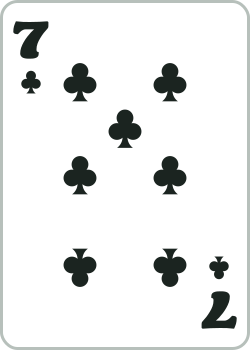
27 in clubs
You
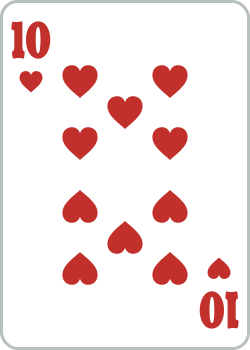
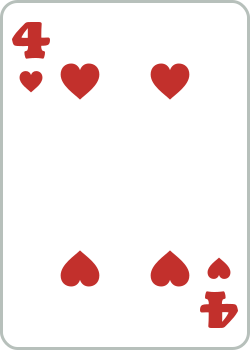
25 in hearts
Ana
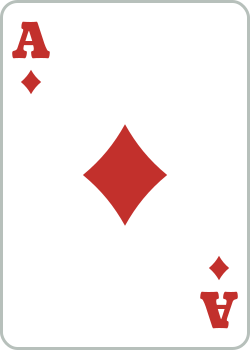
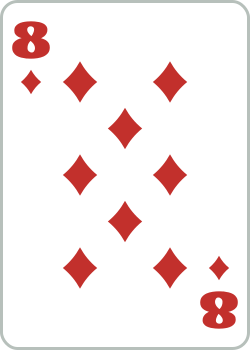
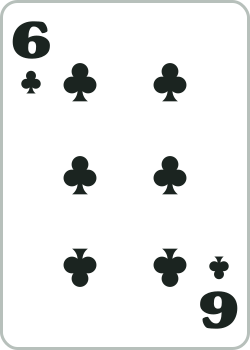
19 in diamonds. Loses a life
Scoring
There are no points to add up between hands. Each hand ends with one or more players losing a life, and a lost life is one token paid into the middle.
| What happened | Who loses | Lives lost |
|---|---|---|
| A knock, and one player other than the knocker has the lowest hand | That player | 1 |
| A knock, and two or more players other than the knocker tie for lowest | Each tied player | 1 each |
| A knock, and the knocker ties for lowest | The other tied players. The knocker is safe | 1 each |
| A knock, and the knocker alone has the lowest hand | The knocker | 2 |
| A player shows 31 | Every other player, the knocker included | 1 each |
| The stock ran out and play stopped with no knock | The lowest hand, and everyone tied with it | 1 each |
- A player on the county who loses even one more life is out. So is a player with 1 life left who has to lose 2.
- If the stock runs out and every player still in is on the county with the same total, nobody loses. Play the hand again.
The last player left in the game wins.
Give each player 3 pennies or chips and have them pay one into the middle for each life they lose. Or write the players’ names on paper with 3 boxes after each, and cross off a box for each life lost.
A worked example: counting a hand
Your hand is the jack and 8 of diamonds and the ace of spades. The two diamonds add up to 18. The ace is a spade, so it cannot join them. On its own it would be worth 11, which is less than 18. Your hand is worth 18.
Diamonds
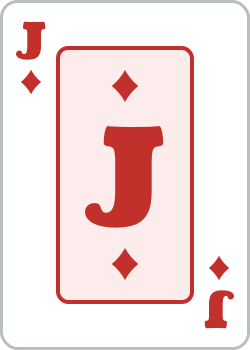
10 + 8 = 18
Spades
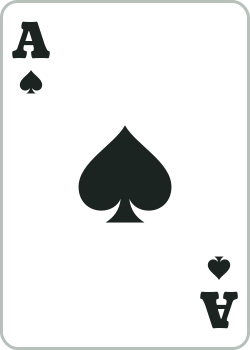
11 on its own, so it does not count
| What happened | Points |
|---|---|
| Jack of diamonds | 10 |
| 8 of diamonds | 8 |
| Ace of spades: a different suit, so it adds nothing | 0 |
| Hand value | 18 |
Scorekeeper
Each player starts with 3 lives. Tap a player’s button to take a life, twice for a knocker who loses 2. The Has 31 button takes a life from everyone else still in. A player who loses their last life is shown on the county, the next loss puts them out, and the game ends when one player is left. It works in this browser, keeps the game if the page reloads, and needs no account.
Other ways to play
31 for 2 players, or the last 2 in a game
The rules do not change. One thing works out differently. The knocker does not discard, so after a knock the top discard is still the card the other player threw away on their turn before the knock. On their final turn, that player may take it back.
House rules and other versions
- Three of a kind
- Some groups give three cards of the same rank a special value. At 30 it ties with three 10-point cards of one suit. At 30½ it beats every hand except 31.
- The knocker loses only 1 life
- A knocker who alone has the lowest hand loses 1 life instead of 2.
- The knocker loses on a tie
- Some groups make a knocker who ties for lowest lose. In one version the knocker loses 2 lives and the others in the tie lose 1 each. In another only the knocker loses. Some also make the knocker lose 2 lives when another player makes 31 after the knock.
- A lowest score to knock
- You may knock only if your hand is worth at least an agreed amount, such as 17, 19 or 21.
- Knocking out of the gate
- If the first player knocks on the very first turn of a hand, nobody gets another turn. Everyone shows their cards at once. In this version a player dealt 31 waits until the first player has chosen not to knock before showing it.
- 31 counts only before a knock
- Some rules end the hand with a 31 only if it is shown before anyone knocks. A 31 made on a last turn after a knock is then the top hand when the cards are shown.
- No loser when the stock runs out
- If the stock runs out before anyone knocks, the hand is a draw. Nobody loses a life.
- 4 lives
- Each player starts with 4 lives instead of 3. One version, called Cadillac, plays this way with 4 nickels each.
- Thirty-One with a widow and a pot
- Everyone pays into a pot. Deal 3 cards each and 3 more face up in the middle, called the widow. There is no stock. On your turn, swap one card with the widow. After a knock, everyone else gets one more turn, and the highest hand wins the pot. A player with 31 knocks at once and wins. Some let you swap several cards.
Rule questions
How many cards do you deal in 31?
3 to each player, one at a time. Then turn the next card face up to start the discard pile. The rest of the deck is the stock.
How many lives do you get in 31?
3, usually kept as 3 pennies or chips. When all 3 are gone you are on the county and still play. One more loss puts you out. Some groups start with 4.
What happens if the knocker has the lowest hand?
If the knocker alone has the lowest hand, the knocker loses 2 lives. If the knocker ties for lowest, the knocker is safe and the other tied players lose a life. Some groups take only 1 life from a knocker who is lowest.
What happens if two players tie for the lowest hand?
Both lose a life. The one exception is the knocker. A knocker who ties for lowest is safe, and only the other tied players lose a life.
Does the knocker get another turn after knocking?
No. Knocking takes the place of your draw, and it is your whole turn. Your hand stays as it is while each other player takes one last turn. Then everyone shows their cards.
What happens when someone gets 31?
They show their cards at once, the hand ends, and every other player loses a life. That holds for a 31 dealt at the start and for one made during play. A 31 made on a last turn after a knock costs the knocker a life too.
Can you add cards of different suits together?
No. Only cards of one suit count. If all 3 of your cards are in different suits, your hand is worth its highest card. A king, a 9 and a 5 of three suits are worth 10.
Is three of a kind worth 30 in 31?
Not in the main rules. Three cards of one rank are in three suits, so the hand is worth one card. Three queens are worth 10. Some groups count three of a kind as 30 or 30½, so agree on it before you play.
Can you knock on your first turn?
Yes. The rule sources we checked do not forbid it, and the other players each get their one last turn as usual. Some groups play that a knock on the very first turn of the hand ends it at once, with no more turns.
What does on the county mean in 31?
It means you have lost all 3 of your lives but are still in the game. You keep playing. If you lose again, even 1 life, you are out.
Can you pick up the top discard and throw it straight back?
No. If you take the top discard, you must keep it and discard a different card. A card you draw from the stock may be thrown away at once.
What happens when the stock runs out?
Play goes on with the discard pile only. Each player may take the top discard. When a player does not want it, play stops, everyone shows, and the lowest hand loses a life. Some groups call the hand a draw instead.
Words used in 31
- Stock
- The face-down pile of cards left after the deal. You may draw its top card.
- Discard pile
- The face-up pile next to the stock. It starts with one card turned up after the deal, and each player who draws adds a card to it.
- Hand value
- What your 3 cards are worth: your cards of one suit added together, using the suit with the biggest total.
- Knock
- To end the hand by knocking on the table at the start of your turn instead of drawing. Each other player gets one last turn.
- 31
- An ace and two 10-point cards of one suit. The best hand. Showing it costs every other player a life. Some players call this a blitz.
- Life
- One of the 3 tokens, such as pennies or chips, each player starts with. Losing a life means paying one into the middle.
- On the county
- Having lost all your lives while still in the game. You keep playing, and one more loss puts you out. Also called on welfare, on your honor or floating.
- Widow
- In the widow version, 3 face-up cards in the middle that players swap their cards with. There is no stock.
What you need
- A standard deck of playing cardsOne 52-card deck is all the cards you need. Take the jokers out.Find it on Amazon (A standard deck of playing cards, opens in a new tab)
- Poker chips or countersOptional. Any small tokens work as lives, and pennies are the classic choice. You need 3 for each player.Find it on Amazon (Poker chips or counters, opens in a new tab)
As an Amazon Associate, we earn from qualifying purchases. How the site is paid for.
Checked against
These rules are written in our own words from Pagat and checked against Wikipedia. Sources last checked on October 12, 2026.
- First source: Pagat, 31 (Scat). The main game on the page: 2 to 9 or more players, the deal one at a time, the upcard and stock, the turn, no throwing back the top discard, hand values, knocking instead of drawing, declaring 31 at any time including after a knock, who loses lives, the knocker’s tie and 2-life rules, 3 pennies, on the county and its other names, going out, the end of the stock and the replayed hand when everyone left ties on the county, and the variants for three of a kind, the knocker’s penalties, a minimum to knock and Cadillac’s 4 lives.
- Second source: Wikipedia, Thirty-one (card game). A check of the main rules: 3 cards each, the stock and the upcard, 3 pennies as lives, a 31 shown before a knock, ties, the knocker’s safety in a tie and 2 lives, and on the county. Also 30.5 for three of a kind, knocking out of the gate, a 31 counting only before a knock, a draw when the stock runs out, the knocker losing 2 when a 31 is made after a knock, and taking back your own discard with 2 players.
Other sources we used (1)
- Bicycle Cards, Thirty-One. The 52-card deck, the 3-card hand, card values, adding only cards of one suit, 31 as the best hand, knocking with one more turn for everyone else, a 31 ending the hand at once, the first deal by lowest cut and the deal passing left. Its own game uses a face-up widow and a pot instead of a stock and lives, which the page gives as a variant, along with its immediate showdown after a knock before anyone has swapped..
Where the sources differ (9)
| Topic | Pagat | Wikipedia | This page |
|---|---|---|---|
| Which game is described | 31 or Scat: a stock and a discard pile, a draw and a discard each turn, and the lowest hand loses one of 3 lives. | The same game: 3 cards each, a stock with one card turned up to start the discard pile, and 3 pennies each as lives. | Follows both. Bicycle’s Thirty-One is a different form, played with 3 face-up cards in the middle and a pot instead of a stock and lives. It is a variant, and Bicycle is used for card values, the one-suit count, the knock and the 31. |
| Number of players | 2 to 9 or more. | 2 to 7. | 2 to 9, with a note that bigger groups play too. Bicycle lists 2, 3, 4 or 5 and more. |
| Choosing the first dealer | Any way you like. The deal passes clockwise. | Not stated. Play starts on the dealer’s left and goes clockwise. | Any way, with Bicycle’s lowest cut given as one way in a setup note. The deal passes to the left, as Pagat and Bicycle say. |
| A knock on the first turn | The main rules set no limit on when you may knock. Each other player always gets one last turn. | In a variation for larger groups, a knock on the very first turn ends the round at once. This is called knocking out of the gate. | Follows Pagat. Knocking out of the gate is a variant. Bicycle’s widow game also shows the hands at once after a knock before anyone has swapped. |
| What 31 does | Show it at once, and every other player loses a life. It counts even after a knock, and then the knocker loses 1 life like the rest. A 31 not declared at once cannot be claimed later. | A 31 made before anyone knocks ends the round, and all other players lose a life. It must be declared the moment it is made. A 31 after a knock comes up only in a variation, where it costs the knocker 2 lives. | Follows Pagat. A 31 counting only before a knock, and the knocker losing 2 for a 31 after a knock, are variants. |
| Who loses at the end of a hand | The lowest hand loses a life. Ties for lowest all lose, but a knocker in the tie is safe. A knocker alone at the bottom loses 2. | The lowest hand loses a life, and players tied for lowest each lose one. A knocker in a tie is safe. A knocker who does not beat at least one other player loses 2. | The two agree. Bicycle’s widow game has no lives: the highest hand wins the pot. |
| Lives | 3 pennies each. With none left you are on the county, and one more loss puts you out. A player with 1 penny who loses 2 is out. | 3 pennies each, paid into the middle as they are lost. With none left you are on the county and out on the next loss. A player with 1 penny who has to lose 2 is not covered. | Follows Pagat. |
| Three of a kind | No special value in the main rules. A variation counts it as 30 or 30½. | An optional rule makes three cards of the same value worth 30.5. | No special value, so it is worth one card. 30 and 30½ are a variant. |
| When the stock runs out | Play goes on while each player takes the top discard. When one does not, everyone shows and the lowest loses a life. If all the players left are on the county and tie, the hand is played again. | The round ends in a draw. | Follows Pagat. The draw is a variant. |
What on this page is our own
- The playing time of about 20 to 30 minutes is our estimate.
- The knock example, the hand-counting example, the table of hand values and the pieces pictured at the top of the page are our own, and so is their arithmetic.
- That three of a kind is worth one card under the main rules is our reading of Pagat’s rule for counting a hand. Pagat says so only by giving the 30 and 30½ values as a variation.
- The advice to knock when you think at least one player will end lower than you is our wording of what Pagat and Wikipedia say about when to knock.
- That you cannot draw first and then knock follows from both sources putting the knock in place of the draw.
- That the rule sources set no lowest score to knock and do not forbid a knock on the first turn is our reading of their main rules. Pagat lists a minimum as a variation.
- That nobody is safe in a tie when the stock runs out follows from there being no knocker.
- In the variant where 31 counts only before a knock, the remark that a later 31 is just the top hand is our reading. Wikipedia does not spell it out.
- The remark that no source says what happens to the paid-in tokens at the end is ours. Pagat and Wikipedia describe paying in but not paying out.
- The notes under What you need describe products and are not rules.
Spotted a mistake? Email [email protected] and we'll check it against the sources.